The Essentials
What it is.
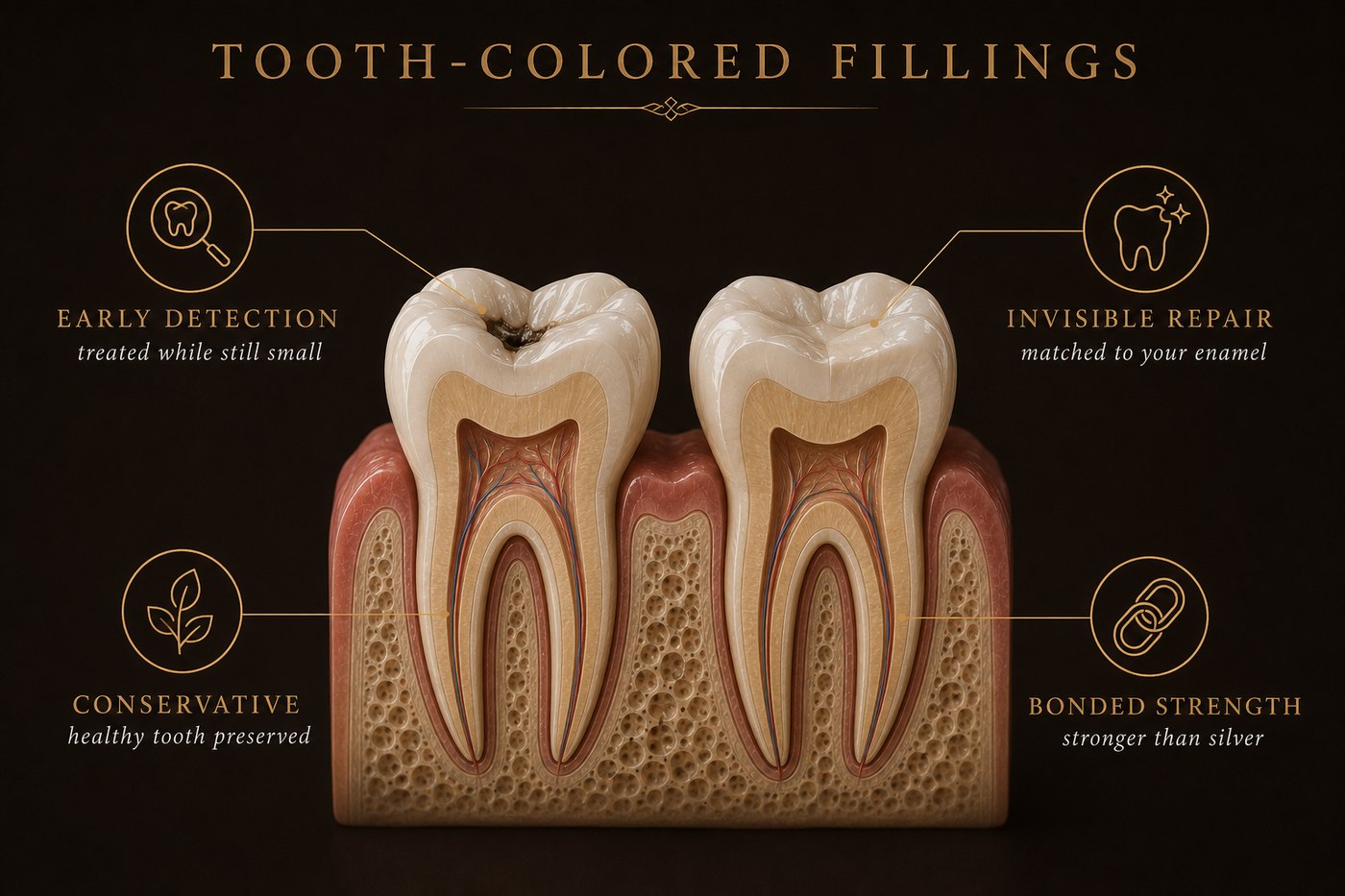
A filling repairs a cavity — decay that has broken through the enamel — before it can reach the nerve. We use tooth-colored composite bonded directly to the tooth: stronger for the structure that remains, and invisible when you smile.
The philosophy here is minimally invasive: find decay early, remove only what’s diseased, and keep the rest.
Is This You?
Sound familiar?
- Sensitivity to sweets, cold, or biting
- A dark spot or a rough edge you can feel with your tongue
- Food catching in the same place every time
- An old silver filling that’s cracking at the edges

The Process
What to expect.
- Comfortable numbing
The area is fully numbed — patients consistently tell us this was easier than they feared.
- Conservative removal
Only the decayed portion is removed; healthy enamel stays.
- Bond, sculpt, polish
Composite is bonded in layers, shaped to your bite, and polished to match.
Real Results
Before & after.
A tooth-colored filling case from Dr. Paulson’s files is being prepared for this page.
Every case on this site is a real Arbor Dental patientGood To Know
Questions, answered.
Composite vs. silver — does it matter?
Composite bonds to the tooth (silver only wedges), requires less drilling, and looks like nothing happened.
How long does a filling last?
Seven to ten years or more, depending on size and habits; checkups catch aging fillings before they fail.
Can I skip a small cavity?
Decay only moves one direction. Small fillings are quick and inexpensive; waiting turns them into crowns and root canals.

Ready when you are.
New patients are welcomed with an unhurried, comprehensive first visit — photographs, a conversation about your goals, and a plan you'll understand completely.
Schedule a Consultation