The Essentials
What it is.
Sleep apnea stops your breathing during sleep — as often as 20 to 30 times an hour. Each pause jolts your brain briefly awake to restart breathing; you don’t remember it, but it robs you of deep sleep and leaves you exhausted, no matter how long you were in bed.
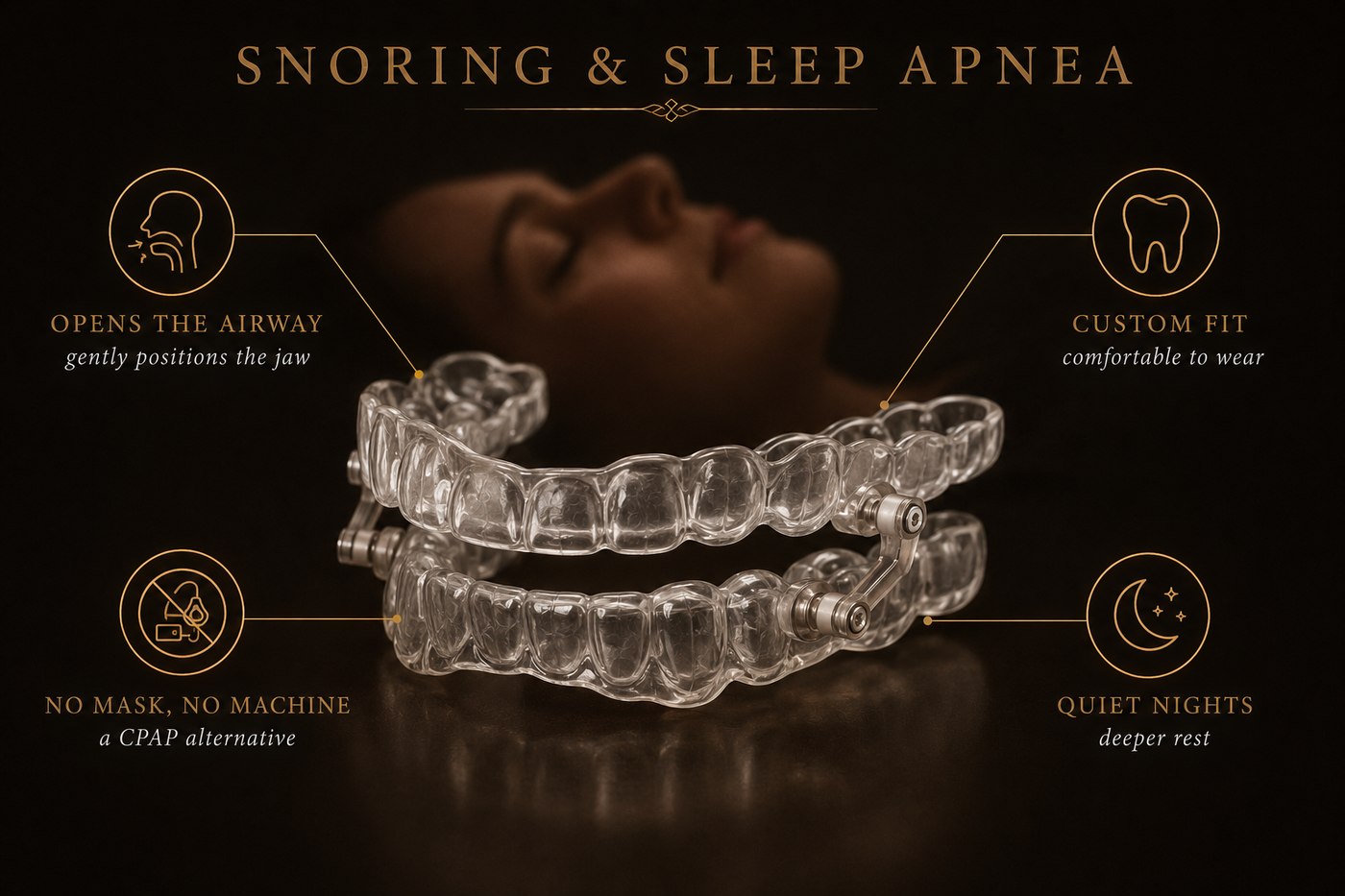
The most common form, obstructive sleep apnea, happens when soft tissue at the back of the throat collapses. For many patients, a custom oral appliance that gently repositions the jaw keeps the airway open all night — no mask, no hose, no machine.
Warning Signs
Sound familiar?
- Loud snoring, or snorting/choking sounds at night
- Unexplained daytime drowsiness
- Morning headaches or a dry mouth on waking
- A partner who’s noticed pauses in your breathing
The Process
What to expect.
- Screening
We evaluate your symptoms, airway, and history — and coordinate a sleep study with your physician when a diagnosis is needed.
- Custom appliance
A precision-fitted device positions your jaw to keep the airway open — comfortable enough to actually wear.
- Follow-up
Fit and effectiveness are refined over follow-ups until the snoring stops and the mornings improve.
Real Results
Before & after.
A sleep appliance case from Dr. Paulson’s files is being prepared for this page.
Every case on this site is a real Arbor Dental patientGood To Know
Questions, answered.
Is an oral appliance as good as CPAP?
For mild to moderate obstructive apnea — and for CPAP-intolerant patients — appliances are an effective, guideline-supported option.
Is snoring always apnea?
No, but loud chronic snoring is its most common flag, and it’s worth screening rather than guessing.
Will insurance cover it?
Often through medical (not dental) benefits when apnea is diagnosed — the front desk will help you navigate it.

Ready when you are.
New patients are welcomed with an unhurried, comprehensive first visit — photographs, a conversation about your goals, and a plan you'll understand completely.
Schedule a Consultation